Submitted by Dr. Cleantus Jean, Jr., District 7020, Cap Haitien Rotary Club
As a Haitian orphan who has realized his dream of becoming a physician, I understand a bit about empowerment. About what it is like to be mired in poverty, with only the richness of dreams and goals to fuel an intense personal desire to succeed. About God-given opportunities that require dedication and hard work - yet that profoundly change the trajectory of one’s life.
As a Rotarian, I often hear the word empowerment used to describe the goal or impact of projects so generously funded by Rotarians and their Clubs. Yet, I wonder how many of us fully grasp the life change that empowerment brings.
I am not certain empowerment can effectively be defined, quantified or measured, especially as I see women in my country become business owners and leaders. How can we possibly calculate the inner strength and courage that develop when a woman feels valued, perhaps for the very first time in her life? When her self-pride and confidence are awakened as she is acknowledged by her daughter as a role model and leader? When she walks through her village holding herself a little taller, a little straighter because she overhears her neighbors referencing her as a businesswoman “who can now pay tuition for her son to go to school”? When she understands the responsibility that comes with her success and chooses to share her knowledge and skill by mentoring others? Such measures as these go far beyond definitions and measures that a dictionary or statistical analysis provide.
Kofi Annan, the Ghanian diplomat who served as the 7th Secretary General of the United Nations from 1997-2006, and who was a co-recipient of the Nobel Peace Prize in 2001, stated, “There is no tool for development more effective than the empowerment of women."
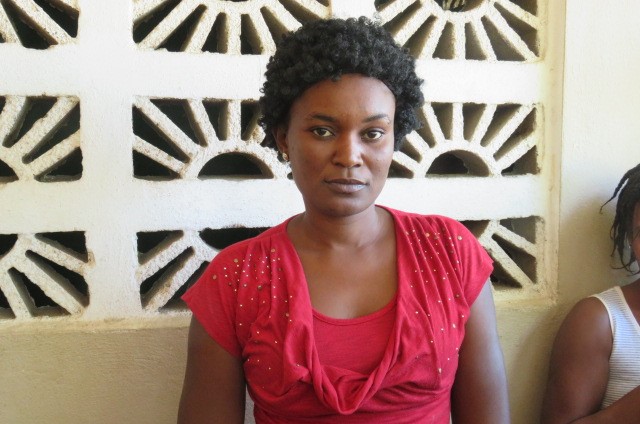
Haitian businesswoman, Christianie Pierre, has experienced such empowerment. She is one of sixty women in the rural village of Garde Saline who received business training and a small business loan, with ongoing technical assistance as she operates and grows her small business. “Before this program, I was doing nothing. With the loan, my fiancé’ and I started a business, and it has changed my life. We have started a local pharmacy, and soon I will begin studying nursing.”
A Women’s Business Training and Revolving Micro-Loan Fund was first established with The Faith Project in 2015 by Rotarian Lynn Hunt and her husband, Paul. Today, the program is in its third phase of operation and has garnered additional financial, leadership, and mentoring support from Rotarians’ Debra Warner and Ed Williams, Linda Marrin, Dave Hardie, Rick and Susan Bricker, Bob McLean, and Rick Adams.
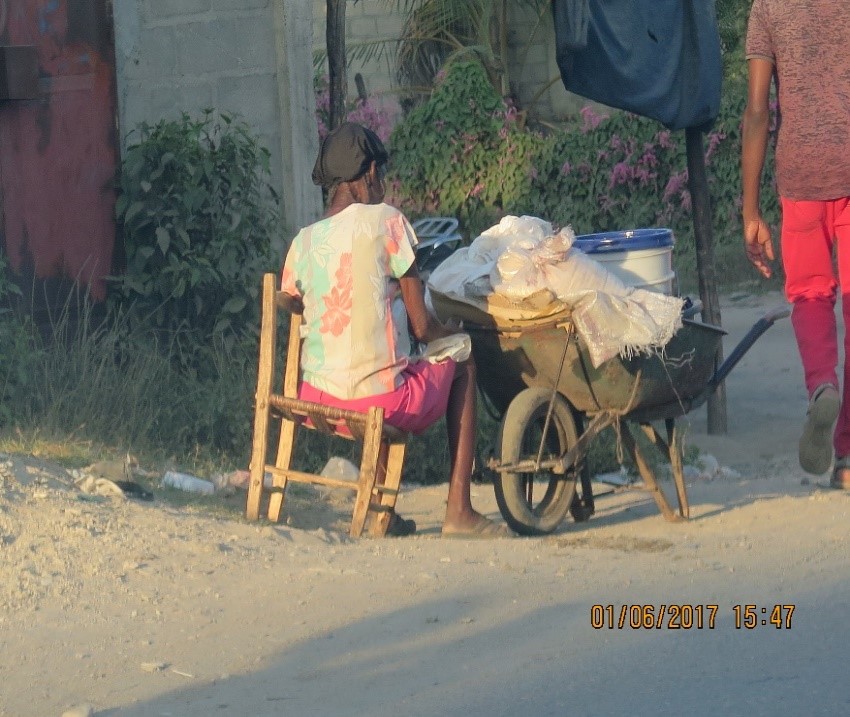
Loans average $225, with 5% interest charged. All loan payments, plus the interest, return to the revolving loan fund so that additional women can benefit from the program. Most of the women purchase product in larger Haitian cities or in the Dominican Republic and resell it in multiple villages around Garde Saline. Some work with local farmers to buy rice or other crops as a wholesale distributor for other women’s businesses.
Often, they transfer their goods to marketplaces by wheelbarrow, laying their wares out on sheets or tarps spread on the ground. In this way, their businesses are mobile and offer them the opportunity to sell in both smaller and larger communities.
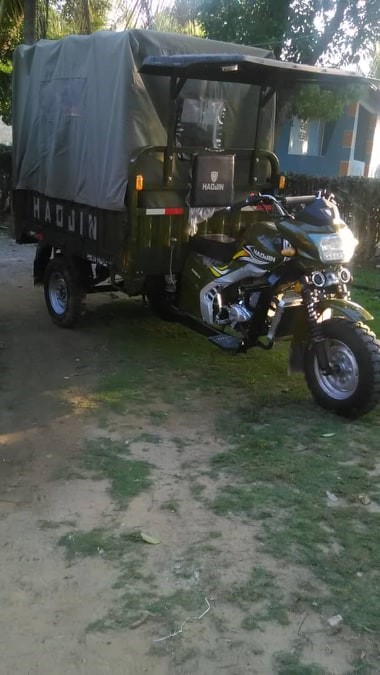
Affordable and dependable transportation has been the number one challenge area for the women, especially as fuel prices rise to as high as $18.00 a gallon. In November, a three-wheeler with a flatbed was purchased solely for their use, which will help reduce both their time and expense when purchasing and transporting product.
In 2012, when The Faith Project first began working in Garde Saline, it was considered to be one of the poorest villages in the NE District of Haiti. There was 98% unemployment, with not one woman identifying a wage-earning job. Women who worked hard to care for their families under the most impoverished circumstances were underestimated in terms of skill and business acumen and certainly were not seen as leaders for the village. Yet, today, this economic opportunity has empowered these women to speak boldly and proudly about their leadership role in providing for their families and building the economic base of their community:
- "I no longer have to stay home and can earn some wages to help my family."
- "I am now respected in the community for being a business leader."
- "The benefits I receive from my business supply needs for my family."
- "People now see women in a positive way for being creative and positively affecting their economic situations."
- "I feel good about myself as I contribute to my family."
- "What I do in business brings money to the whole village."
- "I have been able to buy goats, now, and pay for my kids’ school."
- "Do you know that feeling when your child asks you for something and you can now give it to him?"
In September 2019, The Faith Project received a grant from The Fetzer Institute to bring the Women’s Business Training and Revolving Micro-Loan Fund to Viard, another village in the NE District. Currently, forty women have been selected to participate in the program. As with the women in Garde Saline, the selection process, alone, empowers their dreams and goals to become strong and capable business leaders.
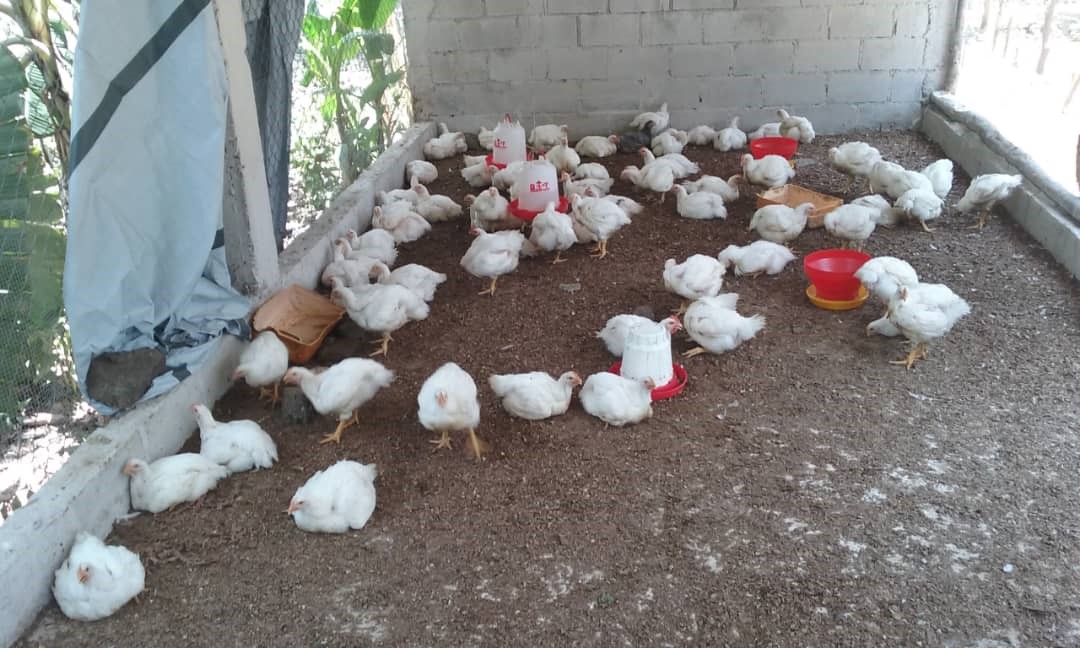
In addition to the Women’s Business Training and Revolving Micro-Loan Fund, in 2019, Rotary provided partial funding for two poultry operations in Garde Saline. One is an egg-laying operation for a large farm association. The farmers work together to raise the chickens, develop markets for their eggs, and use some of the chickens to feed people in the village. In its early stage of operation, it is generating modest income.
The second is a meat-production operation that is intended to provide significant long-term revenue for the Leadership Council in the village to financially sustain programs implemented out of the sustainable community development plan they initiated in 2012. Programs developed so far have included clean water; a sanitation system; a medical clinic; a school; sustainable agriculture programs; road improvements; a rice mill; a community center; and transportation improvements.
Each of these programs has empowered Haitians to think about becoming leaders instead of waiting for aid groups to provide handouts. Each of these programs has empowered villagers to think beyond today, which is hard to do when people die every day from the effects of intense poverty – lack of food, lack of medical care, lack of hope. Each of these programs has empowered Haitians to recalibrate thinking – focusing on opportunity instead of on all that is missing from their lives.
As Rotarians, we contribute our personal resources for dues to our Clubs. I see that, sometimes, paying those dues can just become habit. But, in the future, I want to encourage all my fellow Rotarians to think about the power those dues carry. A personal power to help some of the poorest people in the world succeed. A social power from which leaders are born and from which leaders act to bring about lasting change. An economic power that feeds, clothes, and educates those whose lives will be forever changed because you helped empower them.
Rotary has had profound impact in my country, and I hope my comments, here, help you see the depth of that impact.